
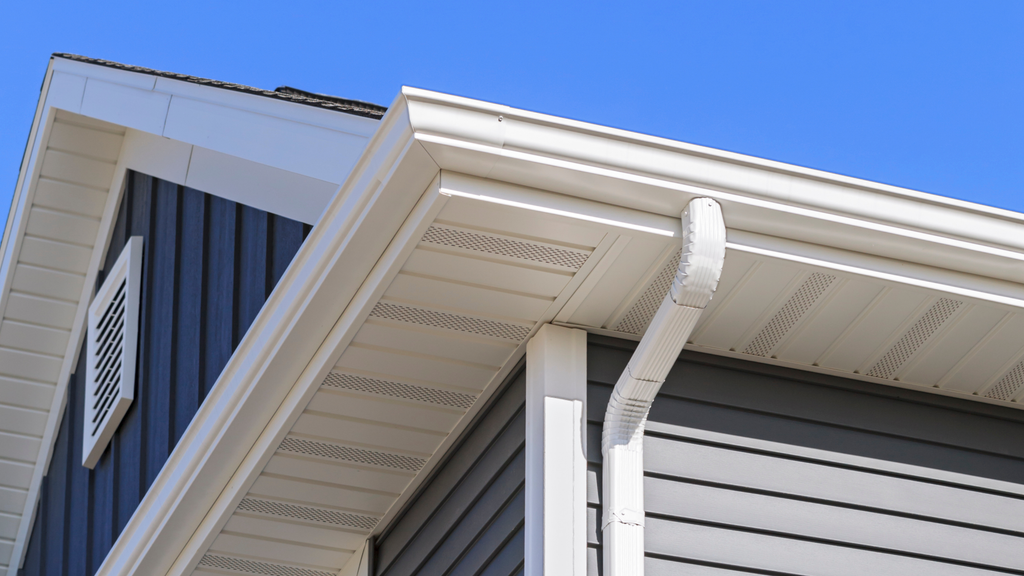
When homeowners notice water pouring over the sides of their gutters during a storm, the first thought is often that the gutters must be clogged. While leaves, twigs, and debris are common reasons for overflowing gutters, they are not the only explanation. In many cases, gutters can be completely clean and still fail to move rainwater away from the home effectively.
Understanding the different gutter overflow causes can help homeowners identify problems that may not be visible from the ground. Issues such as improper gutter slope, undersized gutters, blocked downspouts, poor drainage, and excessive rainfall can all contribute to overflow.
Your Gutters Can Be Clean and Still Overflow
Clean gutters are important because they allow rainwater to flow freely through the system. However, cleanliness alone does not guarantee proper drainage.
One of the most important gutter overflow causes is a problem elsewhere in the gutter system. Even if the gutter channel is free of leaves, water can still overflow if it cannot move quickly enough toward the downspouts.
Homeowners should therefore look beyond the presence of debris when trying to determine why their gutters are overflowing.
Improper Gutter Slope
Gutters need to have a slight slope that directs water toward the downspouts. If a gutter is installed too level or develops an improper slope over time, water may collect instead of flowing efficiently.
Sagging can also create low areas where water remains trapped.
This is one of the common gutter overflow causes because standing water reduces the gutter’s ability to handle additional rainfall during a storm.
If you notice water remaining in certain sections of your gutters after the rain stops, the slope may need to be evaluated.
Gutters That Are Too Small
Another possible explanation is that the gutters are not appropriately sized for the roof.
Larger roofs can collect substantial amounts of rainwater. During heavy storms, a gutter system that does not have enough capacity may struggle to handle the volume of water entering the channels.
Even a perfectly clean gutter can overflow when too much water enters too quickly.
This makes improper gutter sizing one of the important gutter overflow causes homeowners should consider, particularly when overflow happens repeatedly during heavy rainfall.
Downspouts That Cannot Handle the Water Volume
Downspouts are responsible for moving water from the gutters toward the ground and away from the home’s foundation.
If there are not enough downspouts for the size of the gutter system, water may accumulate in the gutters during periods of heavy rain.
A downspout may also be partially restricted even when the gutters themselves are clean.
Insufficient or restricted downspout capacity is another of the gutter overflow causes that can easily be overlooked.
Downspouts May Be Blocked
Homeowners sometimes clean the visible portion of their gutters but do not check the downspouts.
Leaves, small twigs, dirt, and other debris can enter the downspout and create a blockage. When water reaches the obstruction, it has nowhere to go and may back up into the gutter.
As a result, blocked downspouts are among the most common gutter overflow causes that can occur even after gutter cleaning.
A complete gutter maintenance service should consider both the gutter channels and the downspouts.
Heavy Rainfall Can Overwhelm the System
Westerville homeowners experience periods of significant rainfall, especially during strong storms. During an intense downpour, large amounts of water can enter the gutter system in a short period.
Even a properly installed and clean gutter system has a maximum capacity.
When rainfall exceeds that capacity, temporary overflow can occur.
Extreme rainfall is therefore another potential factor among gutter overflow causes, particularly when the gutters only overflow during unusually intense storms.
Roof Design Can Affect Water Flow
The shape and design of your roof can influence how much water reaches particular sections of the gutter system.
Large roof sections may direct substantial water toward one area. Valleys can also concentrate runoff and send more water into specific gutter sections.
If a gutter system was not designed to account for concentrated water flow, certain areas may overflow during heavy rain.
Roof configuration is therefore worth considering when evaluating gutter overflow causes.
Gutter Pitch Can Change Over Time
Even if your gutters were originally installed with the correct slope, their pitch can change.
Loose hangers, damaged fascia boards, aging hardware, or accumulated weight can cause sections of the gutter to sag.
Once the slope changes, water may stop moving efficiently toward the downspouts.
Changes in gutter pitch are among the gutter overflow causes that may require professional inspection rather than simple cleaning.
Loose or Damaged Gutter Hangers
Gutter hangers help secure the gutter system to the home. When hangers become loose or damaged, sections of the gutter can move or sag.
A sagging gutter may create a low spot where water collects.
During heavy rainfall, that water can eventually spill over the gutter’s edge.
Loose supporting hardware is another potential entry on the list of gutter overflow causes, particularly for older gutter systems.
Water May Be Entering the Gutters Too Quickly
Some roof configurations concentrate water into certain gutter sections. For example, roof valleys can direct large amounts of runoff into one small area.
If that section of the gutter does not have enough capacity or a nearby downspout, overflow can occur.
This is why examining the relationship between the roof, gutters, and downspouts is important when identifying gutter overflow causes.
Gutter Guards Are Not Always the Problem
Gutter guards can help reduce the amount of leaves and debris entering a gutter system. However, they do not automatically prevent every possible drainage issue.
If the gutter has an improper slope, inadequate capacity, or insufficient downspouts, installing a gutter guard will not correct the underlying problem.
In fact, homeowners experiencing overflow should have the complete system evaluated rather than assuming that the presence of a gutter guard is responsible.
Understanding the actual gutter overflow causes is the first step toward finding the appropriate solution.
Signs Your Gutter Overflow Problem Needs Attention
Occasional overflow during an extreme storm may not indicate a serious problem. However, repeated overflow should not be ignored.
Watch for signs such as:
- Water spilling over the same gutter section repeatedly
- Overflow occurring during ordinary rainfall
- Standing water inside the gutters
- Gutters pulling away from the house
- Visible sagging
- Water pooling near the foundation
- Erosion beneath downspouts
- Staining on exterior walls
- Overflow occurring even after cleaning
These signs may indicate one or more underlying gutter overflow causes that require professional attention.
Why Gutter Inspections Matter
A professional gutter inspection can identify problems that homeowners may not notice from the ground.
An inspection can evaluate the gutter’s condition, slope, hangers, downspouts, connections, and overall drainage performance.
Rather than repeatedly cleaning gutters that continue to overflow, homeowners can benefit from identifying the actual source of the problem.
Professional inspections are particularly helpful when the gutter overflow causes are not immediately obvious.
Why Westerville Homeowners Should Pay Attention
Westerville homes experience changing seasonal conditions throughout the year. Spring storms, summer downpours, falling leaves, freezing temperatures, and winter precipitation can all affect gutter performance.
A gutter system that performs adequately during light rain may struggle during heavier storms.
Homeowners should pay attention to recurring overflow because it can indicate an issue with capacity, drainage, installation, or maintenance.
Identifying gutter overflow causes early can help homeowners address problems before they contribute to water damage around the property.
Why Choose Sure Flow Gutters and Guards?
At Sure Flow Gutters and Guards, we understand that effective gutter performance involves much more than keeping the channels clean.
Our team serves homeowners in Westerville, Ohio, with professional gutter installation, replacement, repair, cleaning, inspections, and gutter guard services.
When gutters continue to overflow, we look beyond obvious debris and consider the entire drainage system. By identifying potential gutter overflow causes, homeowners can make informed decisions about repairs, replacement, or improvements.
Whether the problem involves gutter sizing, slope, downspouts, hangers, or another component, addressing the underlying issue is important for long-term performance.
Keep Your Gutter System Working Properly
Clean gutters are an important part of home maintenance, but they are only one piece of the puzzle. Gutters must also be properly sized, securely attached, correctly sloped, and connected to functioning downspouts.
If your gutters continue to overflow after cleaning, there may be an underlying issue that requires further evaluation.
The most common gutter overflow causes can include improper slope, inadequate gutter capacity, blocked or insufficient downspouts, heavy rainfall, roof design, sagging gutters, and damaged support hardware.
If your gutters are clean but still overflowing, don’t assume another cleaning will solve the problem. Understanding the underlying gutter overflow causes can help protect your gutters, siding, landscaping, and foundation from unnecessary water exposure.
A properly designed, installed, and maintained gutter system can help keep rainwater moving where it belongs—away from your home.