
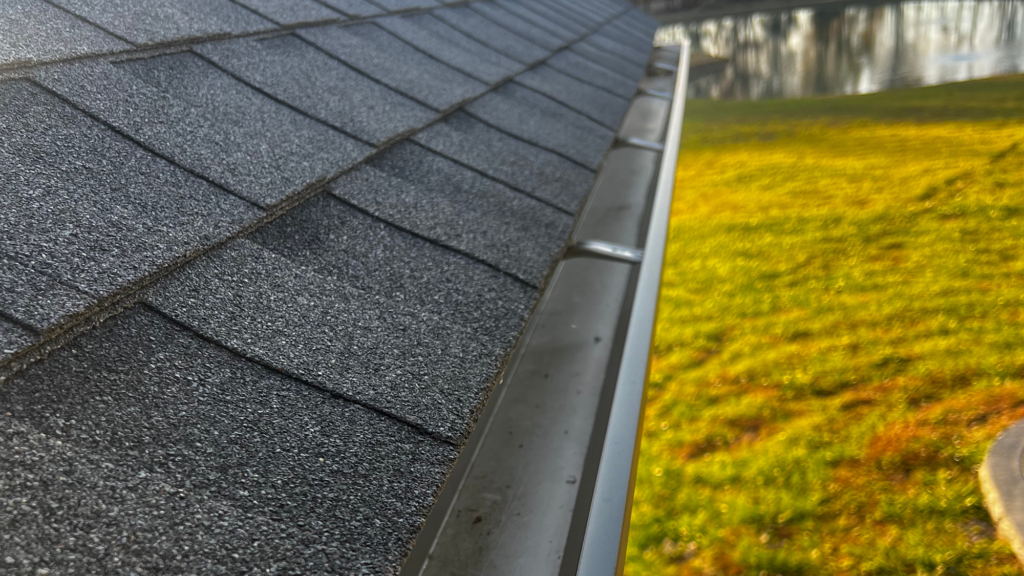
Your gutter system is designed to do one important job: collect rainwater from your roof and safely direct it away from your home’s foundation. While many homeowners focus on keeping gutters clean, they often overlook another critical factor—the size of the gutters themselves. If your gutters are too small for your roof, they may not be able to handle the volume of rainwater during heavy storms, leading to overflows, water damage, and costly repairs. Choosing the correct gutter size for the roof is essential for protecting your home year-round.
Why Gutter Size Matters
Every roof collects rainwater, but not every roof collects the same amount. Larger roofs, steeper roof pitches, and complex roof designs all produce more runoff. That’s why selecting the correct gutter size for the roof is just as important as choosing quality materials.
When gutters are too small, they simply cannot move water away fast enough during heavy rainfall. Overflow can occur even if the gutters are completely clean.
A properly sized gutter system helps protect:
- Your roof
- Foundation
- Basement
- Siding
- Landscaping
- Fascia boards
Choosing the right gutter size for the roof ensures efficient drainage and long-term protection.
What Determines the Right Gutter Size?
Several factors influence the ideal gutter size for the roof.
Roof Surface Area
Larger roofs collect significantly more rainwater than smaller homes. The larger the roof, the greater the gutter capacity needed.
Roof Pitch
Steep roofs allow water to flow much faster than flatter roofs. A steep roof often requires a larger gutter size for the roof to handle increased runoff.
Roof Design
Homes with multiple roof sections, valleys, and dormers concentrate water into certain areas. These high-flow locations may require larger gutters or additional downspouts.
Local Rainfall
Westerville experiences heavy spring rains, summer thunderstorms, and winter snowmelt. Local weather conditions play an important role in determining the proper gutter size for roof.
Sign #1: Gutters Overflow During Rain
One of the clearest signs that your gutter size for roof may be too small is water spilling over the sides during rainstorms.
If your gutters have already been cleaned and still overflow, they may not have enough capacity to handle the water coming from your roof.
Overflowing gutters can lead to:
- Foundation damage
- Soil erosion
- Basement leaks
- Water stains on siding
Consistent overflow is one of the strongest indicators that your gutter size for the roof should be evaluated.
Sign #2: Water Cascades Over the Front Edge
During heavy rainfall, water should remain inside the gutter channel until it reaches the downspouts.
If water pours over the front edge like a waterfall, your gutter size for the roof may be insufficient.
Although clogged gutters can also cause this issue, consistently clean gutters that overflow often point to undersized gutters.
Sign #3: Pooling Water Around Your Foundation
If water frequently collects around the base of your home after rainstorms, your gutter system may not be moving water away efficiently.
An undersized gutter size for the roof can overwhelm the drainage system, allowing water to spill close to the foundation.
Over time, this can contribute to:
- Foundation cracks
- Basement moisture
- Soil erosion
- Structural settling
Proper gutter sizing helps prevent these costly problems.
Sign #4: Downspouts Overflow
Even if the gutters appear large enough, the downspouts must also be capable of handling the water volume.
An improperly designed gutter size for roof system may include:
- Too few downspouts
- Downspouts that are too small
- Poor downspout placement
A professional inspection evaluates the entire drainage system, not just the gutters themselves.
Sign #5: Frequent Gutter Cleaning Doesn’t Solve the Problem
Many homeowners assume overflowing gutters simply need more frequent cleaning.
However, if you’ve maintained your gutters and continue experiencing drainage issues, your gutter size for the roof may simply be too small.
Cleaning cannot compensate for a system that lacks sufficient capacity.
Sign #6: You Have a Large or Steep Roof
Homes with expansive roof areas naturally collect more rainwater.
Likewise, steep roofs allow water to reach the gutters much faster than flatter designs.
In these situations, upgrading the gutter size for the roof may significantly improve drainage performance during heavy storms.
Common Residential Gutter Sizes
Most residential homes use one of the following gutter sizes:
- 5-inch gutters
- 6-inch gutters
While 5-inch gutters work well for many homes, larger or more complex roofs often benefit from 6-inch systems.
Determining the ideal gutter size for roof depends on professional calculations rather than guesswork.
Problems Caused by Undersized Gutters
Choosing the wrong gutter size for the roof can create numerous issues throughout your home.
These include:
- Roof leaks
- Overflowing gutters
- Fascia board rot
- Landscape erosion
- Foundation damage
- Basement flooding
- Mold growth
Many of these repairs are far more expensive than installing the correct gutter system from the beginning.
Can Larger Gutters Solve Drainage Issues?
In many cases, yes.
Upgrading to a larger gutter size for the roof provides greater water-carrying capacity and reduces the likelihood of overflow during heavy rainfall.
Benefits of larger gutters include:
- Improved drainage
- Reduced overflow
- Better storm performance
- Longer gutter lifespan
- Less maintenance
Many Westerville homeowners choose larger seamless gutters for added protection.
Seamless Gutters Improve Performance
In addition to selecting the correct gutter size for the roof, seamless gutters offer several advantages.
Because they have fewer joints, seamless gutters:
- Reduce leaks
- Improve appearance
- Require less maintenance
- Increase durability
Combining seamless construction with the proper gutter size provides maximum protection.
Why Professional Gutter Sizing Matters
Selecting the proper gutter size for the roof involves more than measuring the gutter itself.
Professional installers evaluate:
- Roof square footage
- Roof pitch
- Drainage patterns
- Rainfall intensity
- Downspout placement
- Water flow calculations
These measurements ensure your gutter system performs efficiently under all weather conditions.
Preventing Future Drainage Problems
Even with the correct gutter size for the roof, regular maintenance remains essential.
Homeowners should:
- Clean gutters twice a year.
- Inspect after major storms.
- Keep downspouts clear.
- Install gutter guards.
- Schedule annual professional inspections.
Routine maintenance helps maximize the lifespan and performance of your gutter system.
Why Westerville Homeowners Trust Sure Flow Gutters and Guards
At Sure Flow Gutters and Guards, we understand that every home has unique drainage requirements. Our experienced team evaluates each property individually to recommend the ideal gutter size for the roof based on your home’s design, roof dimensions, and local weather conditions.
Our services include:
- Professional gutter inspections
- Seamless gutter installation
- Gutter replacement
- Gutter repairs
- Downspout installation
- Gutter guard installation
We help homeowners choose the correct gutter size for the roof to ensure reliable drainage and long-lasting protection.
Schedule Your Gutter Evaluation Today
If your gutters frequently overflow, struggle during heavy rain, or fail to move water away from your home efficiently, it may be time to evaluate your gutter size for the roof.
Investing in the right gutter size for roof is one of the smartest ways to protect your roof, foundation, landscaping, and home’s value. Trust Sure Flow Gutters and Guards for expert guidance, quality craftsmanship, and gutter systems built to perform through every Ohio season.